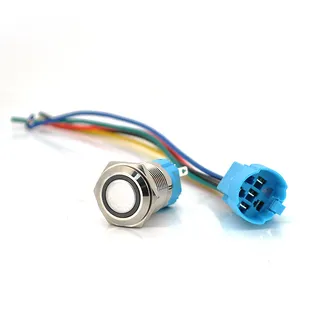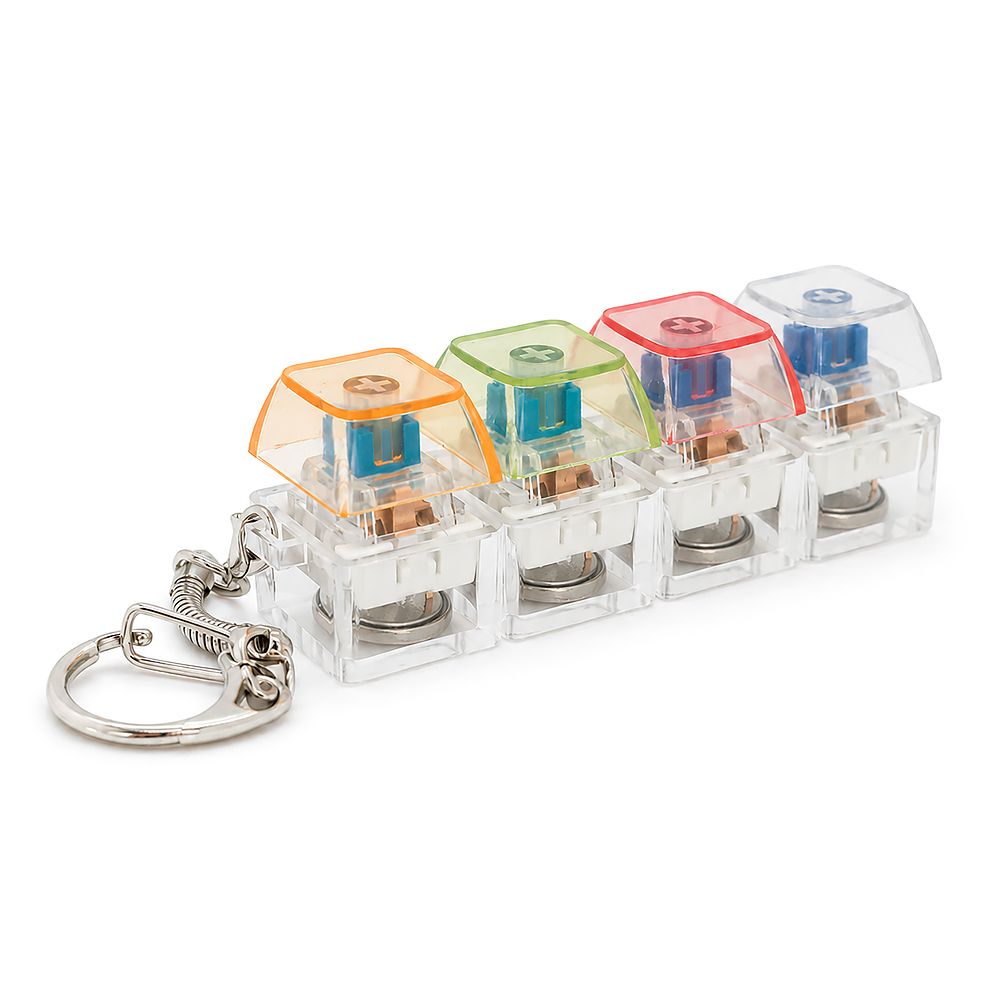
Backlit Anti-Stress Keyboard Keychain Toy 7.5 cm 4-key
Voltronic
170 ₴
 1 / 6
SKU WVS-25838
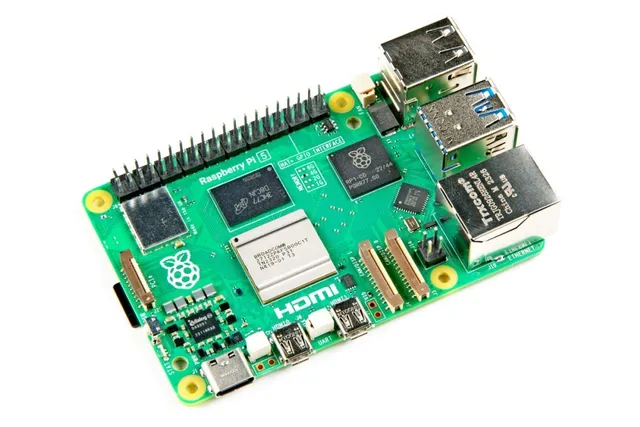
A new update to the Raspberry Pi Foundation mini-computer line. The new generation features twice the processing speed and an expanded assortment and number of I/O ports. The computer is built on a new 2.4 GHz Cortex-A76 ARM processor (in the previous model, the Cortex-A72 processor ran at 1.5 GHz) with 8 GB of LPDDR4X-4267 SDRAM memory. There is also a new southbridge that increases USB3 interface bandwidth, as well as a new graphics core—the VideoCore VII GPU—operating at 800 MHz (as opposed to 500 MHz in the VideoCore VI of the Pi 4). A welcome addition is the presence of a power button, which was absent in all previous models.
Like previous models, externally the Raspberry Pi remains virtually unchanged. There are changes in the configuration of ports and connectors on the board, and in the presence or absence of microchips on the board, but the form factor remains the same. Notable changes include the removal of the 3.5 mm audio jack and composite video output, which provided support for analog video and audio. This capability is no longer present, but it was not particularly in demand anyway. A PCIe module interface has been added, such as PCIe 2.0 x1 for high-speed peripherals, including NVMe solid-state drives. However, working with them requires a special M.2 HAT accessory, which is scheduled for release soon.
The developers have also retained the two micro-HDMI ports that first appeared in the Pi 4 back in 2019. In the new version, the Ethernet port has swapped places with the USB ports—the developers decided to return to the layout used in the third version of the "berry".
Now the single-board computer can display the correct current time without needing to update the time via NTP servers or additional accessories.
As a useful new feature, a power control button has been added. A single press of the button brings up the shutdown/system exit menu. Pressing it again leads to a safe shutdown. The next press turns the device on.
As a good tradition, the 40-pin GPIO header, which first appeared on the Raspberry Pi B+ in 2014, remains unchanged.
I would like to separately touch upon the topic of processor cooling. The processor is quite powerful, so the board heats up significantly during operation. For this reason, manufacturers recommend using an open case for airflow. For active cooling, you can use the Raspberry Pi Active Cooler—a hybrid of a fan and an aluminum heatsink. This assembly makes it possible to efficiently dissipate heat from the processor, RAM, and RP1 chip.
In this model, the bandwidth of the USB ports has increased—the manufacturer claims a twofold increase compared to previous models. Likewise, thanks to the RP1 chip, this model features a dedicated 4-channel 1.5 Gbps MIPI interface for cameras and displays. At the same time, the Pi 5 supports full-fledged operation with multiple high-resolution cameras.
Dispatch to post branches, parcel lockers, or by courier to your doorstep. All packages are insured for 100% of value. Delivery time: 1–3 business days.
Flexible options: Cash on delivery at Nova Poshta branch or bank transfer invoice (IBAN) for individuals, FOP and companies.